Insights
|
Feb 27, 2026
"Traditional construction looks cheap, but it's the most expensive way to build." Chairman Jussi Aho on why shifting from Craft to Assembly can boost your ROI by 500%.

By
Jussi Aho
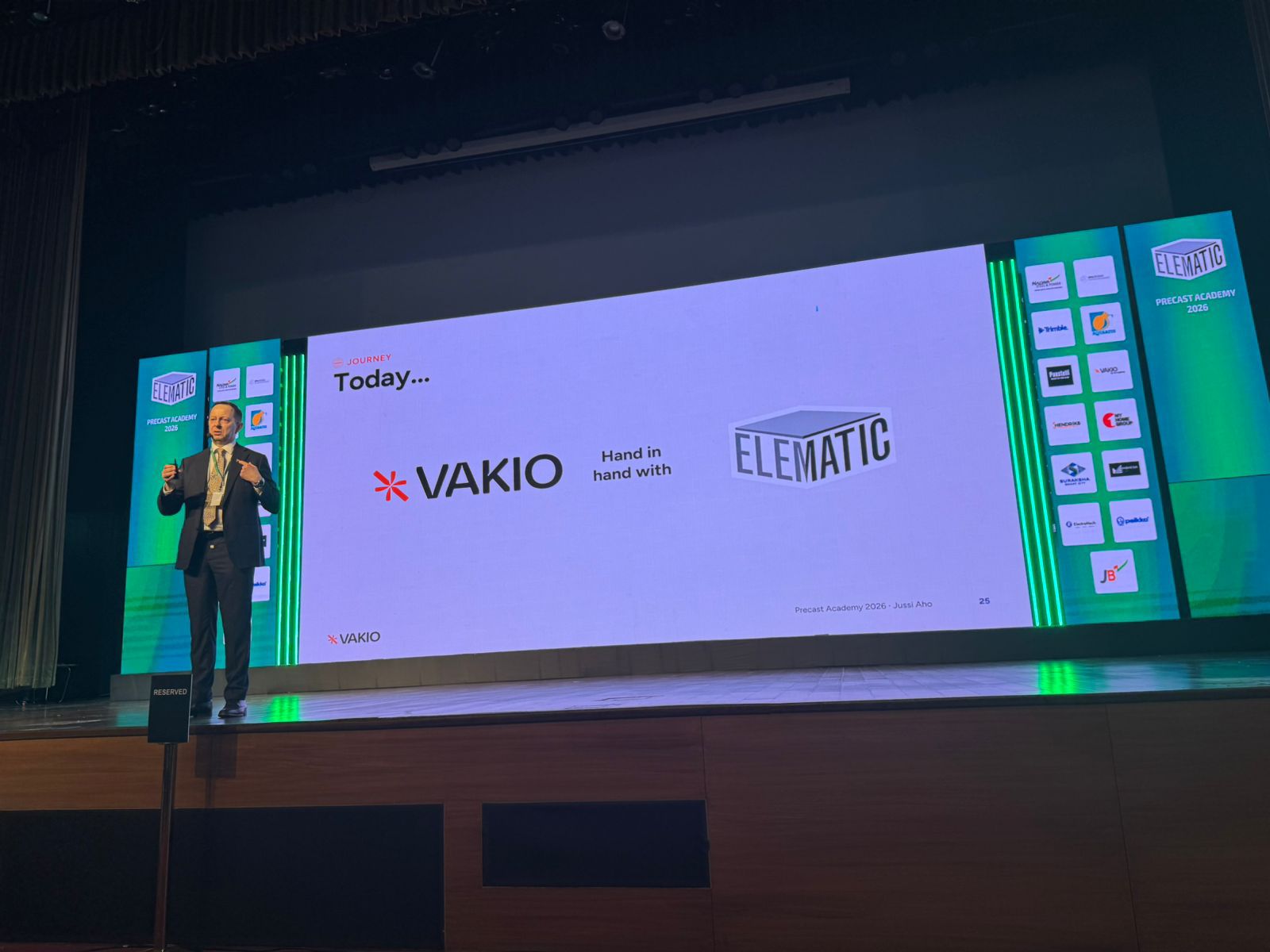
Yesterday, when I was standing on the stage at Elematic Precast Academy 2026 in New Delhi, I looked out at the room full of ambitious developers and engineers. The energy was palpable, but so was a common frustration: projects are getting more complex, yet the way we build them hasn't fundamentally changed in decades.
I told the room something that challenges the foundations of our industry: Traditional craft-based construction looks cheap on the surface, but it is actually the most expensive way to build.
When we factor in the cost of time, capital, and defects, the "savings" found in labor-intensive manual construction evaporate instantly. Moving from Craft to Assembly is not merely a technical upgrade, but a fundamental shift in your business’s financial priorities. Here is why industrial assembly is your only path to profitable growth.
The Illusion of "Cheap" Craftwork (Resource Efficiency)
In many high-growth markets, we view construction through the lens of Resource Efficiency. We obsess over the cost of individual inputs: the price of cement, the rents of machines, and the costs of bathroom fixtures. Because labor appears plentiful, the "craft" approach (where every room is built from scratch on-site) seems like the most economical choice as long as project costs are kept low.
This is a dangerous illusion. Time is money. Craft-based construction is inherently slow due to three structural issues that I see stalling projects everywhere:
Zero Off-Site Production: Because 100% of the work happens on-site, the sheer volume of manual tasks is overwhelming. By offloading complex parts, like bathrooms, to a factory, we make the site manageable again.
The 20% Efficiency Trap: Due to poor processes, labor efficiency on traditional sites is usually below 20%. This means for every five hours of labor you pay for, less than one hour is spent on actual value-adding work. The rest is lost to waiting, searching, or moving.
Information Blackouts: Most sites lack digital transparency. When "nobody knows anything," even minor surprises cause cascading delays that are nearly impossible to fix after the fact.
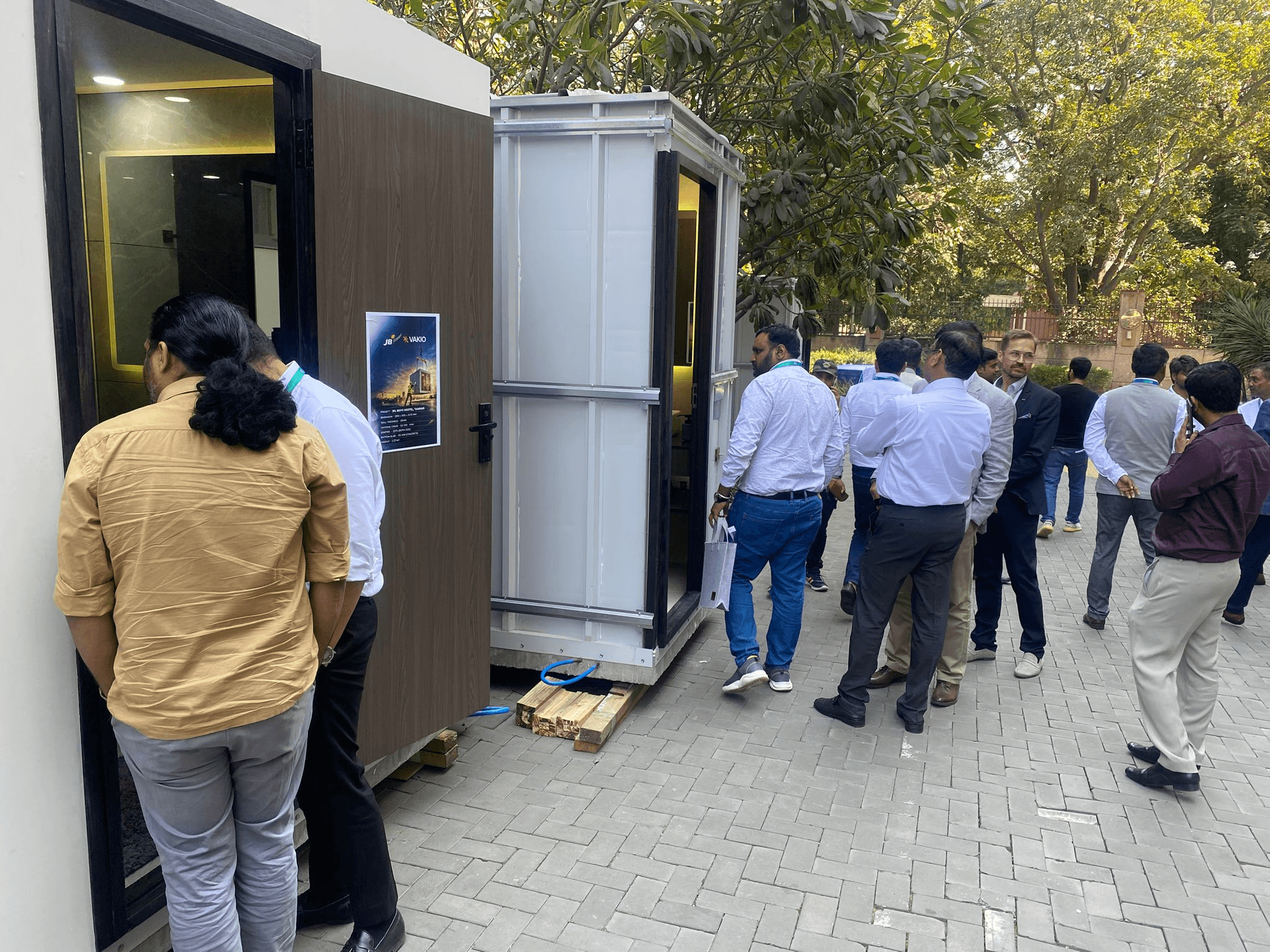
Our bathroom pods drew in people during Precast Academy
The Multiplier Effect: Why Speed is Your Most Powerful Financial Lever
To understand the true cost of building, we must shift our perspective from Resource Efficiency to Flow Efficiency. It isn't just about what you pay for a bag of cement; it’s about how long that cement sits on your balance sheet before it starts generating revenue.
In my experience, industrialized assembly methods (prefabrication and optimized design & site processes) routinely decrease throughput times by up to 50%. The mathematical impact of this on your bottom line is explosive. When you prioritize flow over input costs, you can increase your ROI by 100% to 500%.
Here is the math behind that jump:
Double the Revenue: If you finish a project in 12 months instead of 24, you can use the same pool of equity to complete two developments. You are effectively doubling your business capacity without needing a single extra rupee of capital.
Reduced Interest Costs: Every day a project stays under construction is a day you are paying the bank. Shaving a year off a schedule eliminates twelve months of interest, moving that money directly into your profit margin.
Diluted Overhead: Site offices, cranes, and management teams are fixed daily costs. When you build twice as fast, you effectively cut these expenses in half per project.
Time is the ultimate multiplier of capital. Any developer who ignores the clock in favor of "cheap" manual labor is paying an immense, invisible tax. In a modern market, speed is the primary driver of profit.
The Quality Premium: Eliminating the Second & Third Build
Beyond the cost of time, we must address quality. In the craft-based world, we often build things three times: once when we do it, once when we fix the mistake, and once when the warranty claim comes in years later.
Industrial assembly shifts the most complex parts from the chaotic job site to the controlled environment of a factory. This transition delivers predictability, which is the ultimate hedge against financial risk. Factory-produced components are built to millimeter precision. On-site, "close enough" leads to cascading errors—plumbing that doesn't align or tiles that must be cut to fit crooked walls.
When you move from "Craft" to "Assembly," you shift your mindset from building to manufacturing, creating a culture of zero-defect quality both off- and on-site.
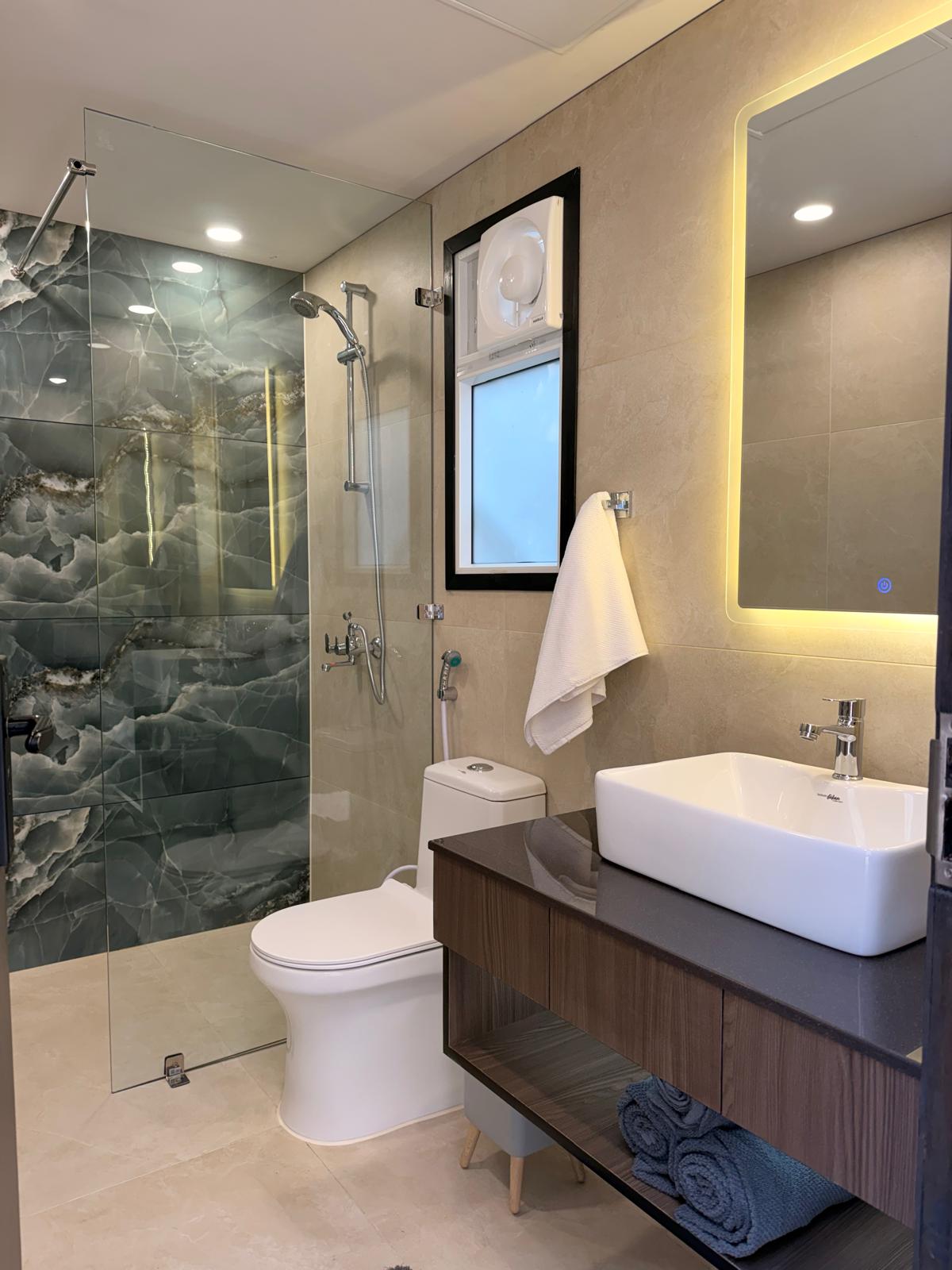
The VAKIO Pod interior
The Imperative: Moving Towards Assembly
Once you've understood the logic I've laid out in this article, the next steps becomes execution. To stop paying the "craft tax," your business must move toward a controlled, assembly-based model. This transition relies on three pillars we advocate for:
Standardized Design Libraries: Complexity kills speed. By using repeatable, pre-engineered designs, you stop "reinventing the wheel" and start working with proven components that fit perfectly every time.
Prefabricated Systems: Shifting labor-intensive work—like frames, bathrooms, and kitchens—into a factory brings stability. The site transforms from a chaotic workshop into a clean assembly point.
Digital Rhythm: The greatest waste is the gap between trades. By using next-generation site software, we implement room-by-room assembly sequences with minimal gaps. This creates a predictable "assembly line" on the construction site.
The Path Forward
The construction industry is at a crossroads. The old logic of "cheap labor" is a proven path to stagnant growth and hidden losses. The new logic of Assembly Construction is the only way to scale profitably in a high-speed market.
I've seen firsthand how this shift transforms a business from a struggling firm into a high-margin developer. It isn't easy, but it is necessary. If you are ready to move your operations to the high-performance world of assembly construction, my team and I are ready to show you how.
Contact us today to learn how to begin your transition.
Best regards,
Jussi
FAQ
Questions about VAKIO
What does VAKIO mean?
"Vakio" is a Finnish term meaning "Standard" or "Constant." In the context of global construction, it represents our core brand promise: replacing the unpredictability of on-site craft with industrial certainty.
What is VAKIO's business model?
VAKIO’s business model is centered around providing India’s developers and builders with Industrial Certainty at a local scale. For a developer, this means three concrete things: Global Standards, Local Scale: VAKIO brings leading Northern European product designs and manufacturing standards to India with the help of local industrial partners. This gives Indian developers access to world-class construction products through a high-volume local supply chain, eliminating the trade-off between global quality and local cost. Industrialized Execution: We replace guesswork with precision. By applying Northern European industrialized methodologies to Indian job sites, we transform complex projects into repeatable, transparent, and factory-like industrial processes. Seal of Quality: A VAKIO-powered project is a market differentiator. Our certification builds immediate trust with your end buyers, signaling a world-class standard of construction.
Why should developers choose VAKIO?
To move from the unpredictability of manual "site-craft" to the certainty and efficiency of an industrial system. By integrating precision-engineered Products (like the VAKIO Pod) with standardized Methods, we deliver double-digit improvements across your entire portfolio: -Up to 2x faster construction -Up to 20% lower costs -Industrial quality and fewer mistakes -Scalable across your portfolio
Who are VAKIO ecosystem partners?
VAKIO Ecosystem Partners are a strategic alliance of world-class firms that share an ambition to industrialize the construction industry. We desire to move away from traditional "low-bid" models toward committed partnerships, aligned incentives and innovation. Our partners consist of: Global Innovation Partners Leading Nordic construction innovators with proven track records in industrialization. They provide the methods and the designs required to transform construction from craft to industrial certainty. Local Industrial Partners Leading Indian industrial firms who support us in manufacturing VAKIO products at scale. They ensure that our global standards are delivered with the cost-efficiency and speed of the Indian market. Every partner undergoes a rigorous certification process to ensure their operations meet VAKIO standards. By bringing these two groups together, VAKIO ensures that your projects are supported by the best that global construction has to offer.
Can I join the ecosystem?
We believe that transforming the construction industry is a team sport. We invite product designers, software developers, and process experts who are working on industrialized solutions to come talk to us. Whether you have a precision-engineered component, a next-generation digital tool, or a more efficient assembly method, VAKIO provides the business framework to help your innovation scale. If you share our commitment to bringing double-digit improvements to construction via industrial logic, we want to explore how your expertise can plug into the VAKIO standard.
How do I start using VAKIO solutions?
Contact our team to share your project plans and business objectives. We will evaluate your portfolio and provide the optimal industrial approach to start improving the quality, pace, and profitability of your builds.
Contact us
Contact us to find out more.
By submitting this form, you agree to our Privacy Policy. We use your name and email solely to respond to your inquiry.